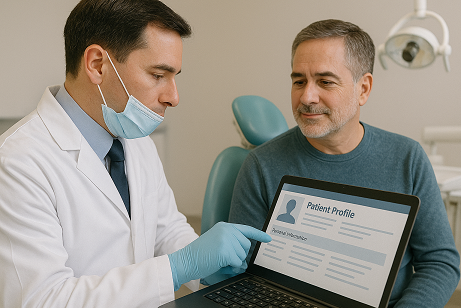
Modern dental clinics run on multiple tools—EHR, imaging, billing, analytics, and patient communication. Without integrations, data is re-typed, workflows slow down, and errors creep in. This guide explains how BeClarified connects your stack with open APIs so data flows in real time, and highlights 5 powerful benefits you can achieve this quarter.
Explore our platform on the Features page
Why disconnected systems hold clinics back ?
When software lives in silos, the front desk re-enters the same details across systems, imaging isn’t linked to charts, and payments don’t reconcile with reports. Teams spend time fixing spreadsheets instead of helping patients, while decision-makers lack a single, trusted view of performance. Integrations remove that friction and keep operations moving.
What BeClarified integrates
BeClarified provides pre-built connectors and extensible APIs so you can plug in the tools you already use:
- Imaging & radiography – Link CBCT/X-rays and imaging notes directly to patient charts.
- Payments, claims & insurance – Sync invoices, adjustments, and claim statuses into one ledger.
- Patient communications – Centralize SMS/WhatsApp reminders, confirmations, and follow-ups.
- Reports & analytics – Feed visit outcomes and revenue into real-time dashboards.
- Accounting & ERP – Export journal entries and settlement files without manual CSVs.
- Custom API work – Build clinic-specific workflows on top of BeClarified’s open endpoints.
5 powerful benefits of dental software integrations
- Single source of truth
One patient record across EHR, imaging, and billing reduces duplicates and keeps history accurate. - Faster, cleaner revenue cycle
Invoices, claims, and payments post automatically; write-offs and reconciliation time go down. - Fewer manual steps, fewer errors
No more copy-paste between systems. Teams follow consistent, automated workflows. - Real-time insight for better decisions
Visits, utilization, and collections update instantly in dashboards you can filter by branch or provider. - Better patient experience
Reminders, follow-ups, and results arrive on time; treatment notes and imaging are always available.
Implementation roadmap (fast & low-risk)
- Assess – List the systems you use and the fields you need to sync.
- Prioritize – Start with high-impact links (e.g., EHR ↔ imaging, EHR ↔ billing).
- Pilot – Enable integrations for one branch or provider; validate data and reports.
- Scale – Roll out with templates, user training, and monitoring dashboards.
Want a walkthrough tailored to your stack? Book a Live Demo and we’ll map the connections with you.

Reliable support that keeps integrations running
Beyond connectors, BeClarified provides dependable support so your integrations remain stable day-to-day. You get guided onboarding, a safe staging/sandbox to test changes, proactive monitoring with alerts, and versioned updates when vendors change their APIs. Clear SLAs and rollback plans minimize downtime and keep patient services uninterrupted.
What’s included
- Onboarding & training for new workflows
- Sandbox testing before go-live
- Monitoring & alerts for key integrations
- Versioned updates when APIs change
- SLA targets and rollback plans

Operational Benefits of Connected Integrations
Connected integrations cut double-entry, improve data accuracy, and speed up patient journeys. Teams spend less time fixing spreadsheets and more time with patients, while managers get real-time metrics to steer the day.
- Fewer manual steps and fewer errors
- Faster invoice-to-payment cycle & better claim clean rate
- Real-time dashboards for utilization, visits, and revenue
- Less reconciliation work; smoother hand-offs between tools
- Better patient experience (timely reminders, results, and notes)
Conclusion
Well-designed integrations make your tools act like one platform: fewer clicks, faster cash flow, and clearer decisions every day. See BeClarified in action or talk to our team about connecting your stack with open APIs via Contact Us.
For privacy standards in digital health records, see the official HIPAA guidelines (HHS).